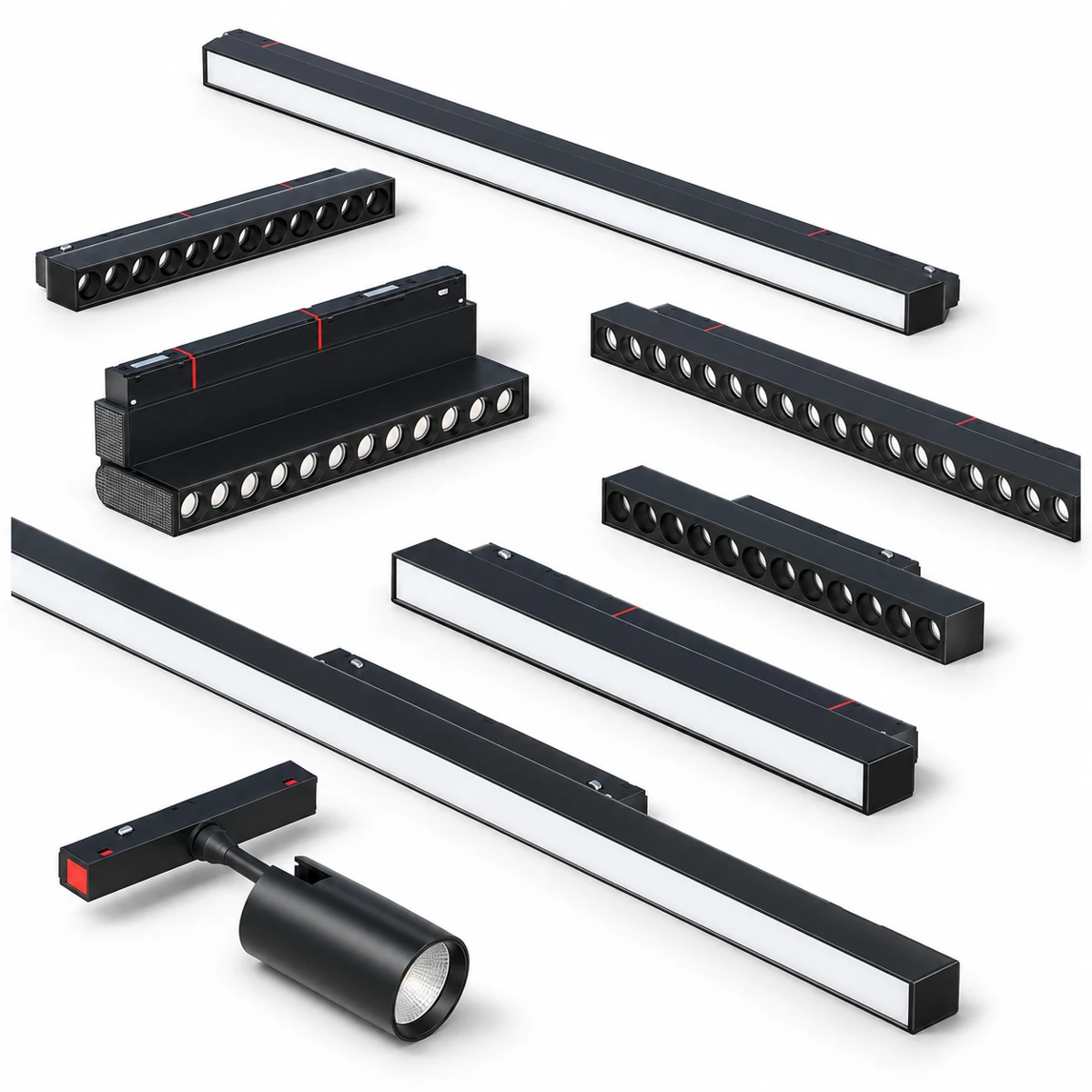
MODEL 114
24V/48V Magnetic Track Light, Smart Dimmable & Tunable, Low-Voltage
Contact us for full datasheet
View product details →Compare the mounting, system and configuration before choosing a model.
Contact us for full datasheet
View product details →Contact us for full datasheet
The product record mentions 24V/48V options. That describes configurations to review; it is not a promise that one module works on both supplies or on every rail. A useful system brief identifies the rail, module, supply, connectors and controls together.
Request this configuration| Option | When to consider it | What to compare |
|---|---|---|
| Rail and mounting | The physical system | Profile, recessed/surface arrangement and connectors |
| Power supply | The electrical system | Quoted voltage, matched supply and system load |
| Light module | The lighting task | Distribution, aiming and the proposed module configuration |
| Controls | The control system | Driver and control combination offered for the chosen configuration |
Separate each component while keeping the compatibility decision at system level.
Review a documented rail, supply and module combination before expanding the order.
Plan how the power supply and connectors can be accessed after installation.
One current luminaire starting point does not establish a complete modular range. Additional modules need supporting records.
Model 114 is selected with a voltage configuration and matched rail. Keep the magnetic module, rail and power arrangement together in the sample brief.
At GDtokin, our magnetic track lighting selection starts with the product format and the installation it needs to fit. Select the required 24V or 48V configuration rather than treating them as interchangeable.
Confirm the module and rail combination for the selected configuration.
Identify the driver, feed and connection package with the sample.
Magnetic lighting: pair the module with its system. Model 114 is selected with a voltage configuration and matched rail. Keep the magnetic module, rail and power arrangement together in the sample brief.
Review the work areas and assembly interfaces relevant to the selected model. Photo positions marked “pending” will be completed with verified workshop images.
Select the required 24V or 48V configuration rather than treating them as interchangeable.
Confirm the module and rail combination for the selected configuration.
Identify the driver, feed and connection package with the sample.
Agree the model, supply package and requested documentation before order approval.
Identify the driver, feed and connection package with the sample. Keep required features, optional configurations and separately supplied parts on distinct quotation lines.
Match the datasheet, drawing and stated options to the selected model.
Review mounting, electrical arrangement, driver access and service space.
Request documentation for the exact model and destination.
Record the configuration and acceptance checks in the approval brief.
Match each document to the exact model and configuration. Document positions below are pending; they do not indicate that a certification has been obtained.
Select the required 24V or 48V configuration rather than treating them as interchangeable. Confirm the module and rail combination for the selected configuration.
Location · application · selected configuration · approved customer outcome
Identify the driver, feed and connection package with the sample. The packing brief should identify the product, any separate components and the labels required for the destination.
Use the installation brief to make quotations easier to compare.
No universal-voltage claim is made. Ask which supply and module combination is included in the quotation.
They are track-related component records and belong in the component route until their exact supply scope is confirmed.
The structure can be drafted now. Matched system documents and enough independent selection content are still required before it is treated as a complete system landing page.
Share the intended layout and mounting method. The review needs to identify available configurations, parts and any unresolved compatibility questions.
Start with a model or application. Review the configuration, required evidence and written terms before sample or order approval.

